The 2026 World Rally Championship (WRC) concluded on Sunday, March 15, with Japanese national Takamoto Katsuta claiming his first-ever victory at the Safari Rally in Naivasha.
However, despite the historic win, Katsuta will not receive any direct prize money from the organisers as is the norm with events of the WRC’s caliber, and there is a valid reason why.
Unlike other global events which come with a hefty prize purse for winners, the WRC does not pay cash prizes to race winners. Drivers are, instead, compensated through bonuses with their teams.
These payouts come in the form of salaries, performance bonuses and sponsorship agreements.
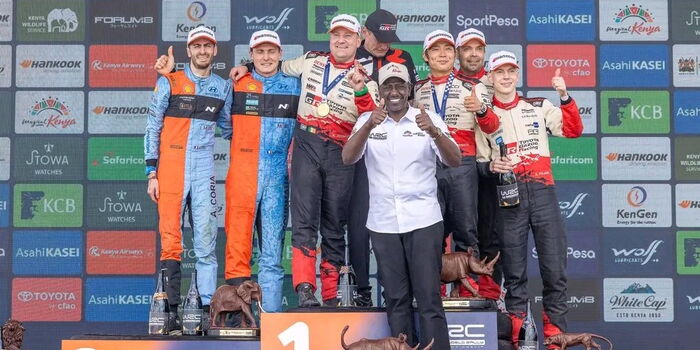
President William Ruto congratulates the winners of the WRC 2026 in Naivasha on Sunday, March 15, 2026.
PCS
In Katsuta;s case, his earnings from the Safari Rally in Naivasha will hence largely depend on the specifics of his deal with Toyota Gazoo Racing – his team.
To dig deeper, even at the end of the season, the overall WRC champion does not receive cash directly from the FIA , much like in Formula 1.
Besides individual glory, Katsuta’s win will almost certainly boost Toyota Gazoo Racing’s standing in the championship, making him an asset for the manufacturer. This typically comes with large perks, meaning he will likely smile all the way to the bank, regardless.
After Naivasha, the Toyota extended its lead to 157 points over Hyundai, who has 114 points, reinforcing its dominance on Kenyan soil.
As far as gifts are concerned, Katsuta was presented with a wooden carving by President William Ruto for his heroics in Naivasha.
The gift is largely symbolic as similar carvings have been given in the past, like the one awarded to Kalle Rovanpera in 2024, which was estimated to be worth around Ksh 25,000.
Katsuta’s triumph came amid a weekend of dramatic retirements and mechanical failures in the rough Naivasha terrain, which was made more challenging by the ongoing rains.
How Katsuta won the WRC
Going into the third day on Saturday, the Japanese national was not in contention for the top spot, trailing behind race leaders who were set for a podium finish.
Oliver Solberg, who had been leading the rally, retired after suffering a transmission failure and alternator problems.
Sebastian Ogier also exited with an alternator malfunction, while Elfyn Evans, the 2025 Safari Rally winner, punctured his rear-right tire and dropped out.
These developments allowed Katsuta to surge ahead, finishing 27.4 seconds faster than Adrien Fourmaux of Hyundai, who secured the team’s first podium of the season.
A rally car making a turn during the shakedown at the WRC Safari Rally Championship 2026, Thursday, March 12, 2026.
Photo
Japhet Kaimenyi