The Energy and Petroleum Regulatory Authority (EPRA) has announced that the prices of petrol, diesel, and kerosene will remain unchanged for the March-April cycle, ending weeks of high anticipation.
In an announcement released on Saturday, March 14, amid the anxiety of Kenyans and motorists over the prices of petroleum products owing to the conflict in the Middle East, EPRA said that the prices of Super Petrol will continue to retail at Ksh178.28 per litre, Diesel at Ksh166.54, and Kerosene at Ksh152.78 in Nairobi.
In Mombasa, motorists will continue to enjoy some of the lowest prices in the country, with Super Petrol retailing at Ksh175.00 per litre, Diesel at Ksh163.26, and Kerosene at Ksh149.49.
In the city of Nakuru, the prices of Super Petrol, Diesel and Kerosene will retail at Ksh177.34, Ksh165.95 and Ksh152.21, respectively.
Daniel Kiptoo Bargoria, Director General of Kenya’s Energy and Petroleum Regulatory Authority (EPRA).
Photo
Daniel Kiptoo Bargoria
Additionally, in Eldoret, EPRA priced Super Petrol at Ksh178.15, Diesel at Ksh166.77 and Kerosene at Ksh153.03 for the next 30 days.
The regulator indicated that the latest prices are inclusive of the 16 per cent Value Added Tax (VAT) in line with the provisions of the Finance Act 2023, the Tax Laws (Amendment) Act 2024, and the revised excise duty rates adjusted for inflation.
According to EPRA, during the review period, the average landed cost of imported Super Petrol increased by 1.00 per cent from Ksh74,520.76 (US$576.34) per cubic metre in January to Ksh75,266.82 (US$582.11) per cubic metre in February this year.
Diesel recorded a higher increase of 8.46 per cent, rising from Ksh75,873.24 (US$586.80) per cubic metre to Ksh82,292.99 (US$636.45), while Kerosene increased by 6.79 per cent from Ksh77,427.43 (US$598.82) to Ksh82,684.76 (US$639.48) per cubic metre over the same period.
At the same time, it said the pricing considered vessels received and discharged between February 10 and March 9 this year.
Despite fears that the situation in Iran and fears of a future shortage could lead to drastic hikes, EPRA said that most of the shipments were February-priced cargoes, meaning that the ongoing situation in the Middle East had not yet had an impact on the current fuel prices.
Nonetheless, concerns remain over a possible supply crisis linked to rising tensions surrounding Iran. The government, however, has sought to calm the situation, saying it is working closely with oil marketers to ensure the fuel supply in the country remains uninterrupted.
On Friday, Energy Cabinet Secretary Opiyo Wandayi assured the public that Kenya has adequate fuel reserves and that there is no imminent shortage, urging citizens not to panic.
He said the government had already held consultations with oil marketers, who confirmed that fuel shipments to the country would continue despite the regional tensions.
The reassurance comes as threats to completely close the Strait of Hormuz intensify. The strategic waterway carries about 21 per cent of the world’s oil supply, including shipments from Saudi Arabia and the United Arab Emirates, raising concerns for Kenya, which heavily relies on Gulf imports under government-to-government fuel agreements.
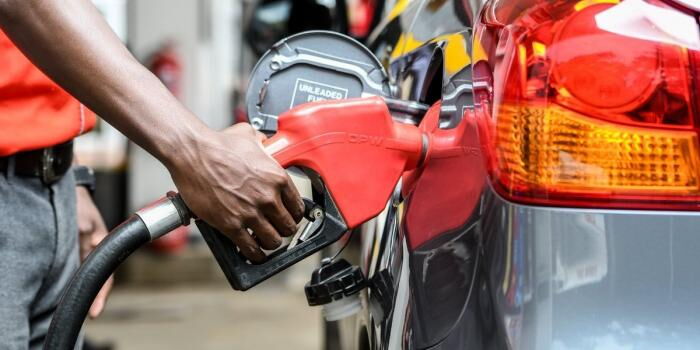
A man fueling a car at a petrol station
Photo
New Vision