The High Court has ordered President William Ruto’s administration to produce eight key procurement documents in the Ksh10 billion Ngong-Riruta commuter meter-gauge railway project.
In a ruling delivered on Thursday, March 19, Justice Bahati Mwamuye directed various state agencies that are involved in the implementation of the project to produce the documents within 30 days.
Among the documents the government was directed to produce include a feasibility study report, procurement records, parliamentary approvals and an environmental impact assessment report.
The directive was made after the judge ruled that the petitioner, who is Busia Senator Okiya Omtatah, had made a valid claim that warranted the government’s response on the matter.
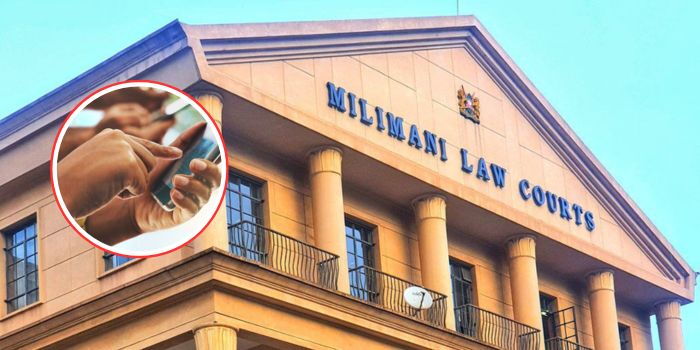
Entrance to Milimani Law Courts, Nairobi.
Photo
The Judiciary of Kenya.
“Without access to the specified documents, the court would be constrained to resolve complex constitutional questions on an incomplete record,” Mwamuye noted.
The judge noted that the petitioner had the right to access information regarding a government project under Article 35 of the Kenyan Constitution.
Mwamuye ordered the state agencies to produce the information after it found out that Omtatah had exhausted all administrative avenues to access information regarding the project.
However, in his ruling, Justice Mwamuye reinstated the previous court orders that had stopped the construction of the railway line pending the hearing and determination of the petition.
While making the ruling, the judge vowed to fast-track the petition, with the final judgment on the case expected to be delivered within the next three months.
Meanwhile, Omtatah and his team had filed a petition before the court challenging the project’s implementation over the constitutional and financial viability of the project.
The Senator questioned the project’s funding framework, where the centre of the case is the Railway Development Levy Fund (RDLF), arguing that the levy is unconstitutional and should be declared null and void.
Omtatah also argued that the government did not obtain required parliamentary approval, conduct robust public participation, or subject the railway allocations to transparent scrutiny before commencing work and releasing funds.
The project consists of four lines of stations, which include Riruta, Karen, Bulbul, and Ngong, which serve the southern corridor and split off from the current Metre Gauge Railway (MGR) at Riruta, close to Lenana School.
According to the government, the project is intended to transport more than 10,000 passengers every day and will significantly reduce peak-hour travel times from two hours to about thirty minutes.
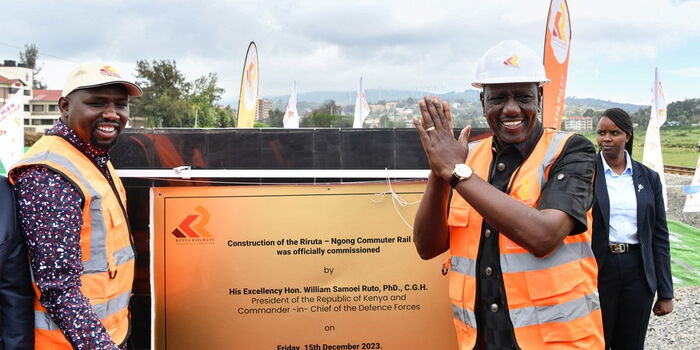
President William Ruto inspecting the construction of the 12.5 Kilometre Riruta-Ngong Commuter Rail on December 14, 2023.
PCS