The government has moved to seize a vehicle linked to a suspected money-laundering case following orders from the High Court.
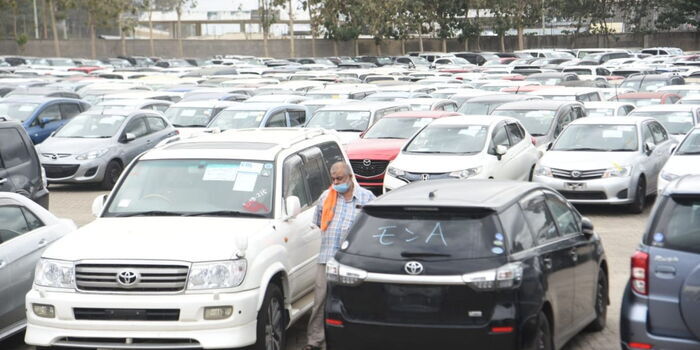
According to a gazette notice issued on Friday, March 13, under the Proceeds of Crime and Anti-Money Laundering Act, the court ordered the forfeiture of a blue Toyota TownAce car after determining that it had been used or was intended to be used in the commission of an offence.
The forfeiture order was issued in the Anti-Corruption and Economic Crimes Division Case, where the Assets Recovery Agency sought to have the vehicle declared proceeds of crime and surrendered to the State.
In the ruling delivered on February 9, 2026, Justice Wilfrida Okwany declared the vehicle an instrument used in the commission of an offence, making it liable for forfeiture to the Government of Kenya.
An image of Milimani Law courts.
Photo
“This Honourable Court be pleased to issue orders declaring Motor Vehicle Chassis number SR40-0017560 as an instrument or vessel used or intended for use in the commission of an offence, therefore liable for forfeiture to the Government of Kenya,” the judge stated.
Following the ruling, the court then ordered that the vehicle be transferred to the Assets Recovery Agency on behalf of the government.
The judge also directed the National Transport and Safety Authority (NTSA) to register the vehicle in the agency’s name in the national motor vehicle registry.
“An order be and is hereby issued directing the Director-General of the National Transport and Safety Authority to register the motor vehicle Chassis number SR40-0017560 in the NTSA system in the name of the Assets Recovery Agency,” the notice added.
Under Kenyan law, apart from the money laundering offence, the government can forfeit a vehicle when it is used in the commission of a crime, when taxes or duties are not paid, or due to serious or repeated traffic violations.
Forfeiture usually arises from defaulting on contractual obligations. In such a case, the court would be compelled to apply the Proceeds of Crime Act and the Anti-Money Laundering Act of 2009.
According to the act, money laundering is defined as any act that conceals or disguises the nature, source, location, disposition, or movement of property that is or forms part of the proceeds of crime.
The Assets Recovery Agency is empowered to seek the forfeiture of property suspected to have been used in criminal activities, even where the property, rather than an individual, is named as the respondent in court proceedings.
Luxurious cars ferrying Cabinet Secretaries leaving the State House in Nairobi.
Photo
Citizen TV